
So, You Want to Become a Tutor? Here’s What Nobody Tells You

A few years ago, becoming a tutor was refreshingly simple. You knew your subject, you liked working with children, and you found a family who needed help. That was more or less it.
It isn’t like that anymore – and honestly, that’s a good thing.
Safeguarding expectations have tightened, rightly so. Parents ask sharper questions before they hand over their child for an hour a week. And since I started tutoring, an entirely new layer of responsibility has landed on independent tutors that simply didn’t exist before: UK GDPR, data protection, cookie consent, the works. None of it is optional, and very little of it gets taught anywhere.
I’m Pauline, founder of Tutoristic, and over the years I’ve tutored well over 200 students – from children preparing for the 11+ to teenagers working towards their GCSEs. I’ve also spent time tutoring through an agency, working face-to-face with neurodivergent pupils during the school day, which turned out to be some of the most rewarding tutoring I’ve done, alongside my own private students in the evenings.
What I’ve learned, watching the profession change, is that the gap between “I’m good at my subject” and “I’m running a proper tutoring practice” has grown a lot wider than people expect. And almost nobody talks about the second half.
The bit that catches people out
Ask most new tutors what they’re worried about, and you’ll hear the same things: Am I qualified enough? Will parents take me seriously? What if I can’t fill my timetable?
Those are real concerns, but they’re rarely the ones that actually trip people up. The tutors who struggle tend to come unstuck on the quieter stuff – not having a DBS check sorted before their first enquiry, not knowing what to do if a child discloses something concerning, not having anything in writing when a parent disputes an invoice, or discovering too late that their website needs a privacy policy the moment it has a contact form.
None of this is complicated once you know it. But finding it all in one place, written by someone who’s actually done it rather than theorised about it, is harder than it should be.
Why I wrote the guide
I put together So, You Want to Become a Tutor? because I kept having the same conversations – with people thinking about tutoring for the first time, and with tutors already working who’d never quite got round to sorting the paperwork side of things.
It walks through the whole start-to-finish version: whether tutoring is genuinely right for you, getting your DBS and safeguarding knowledge in place, working for yourself as a sole trader, planning and delivering sessions that actually move a child forward, writing reports parents will value, setting your rates without underselling yourself, and building a practice that lasts – including the case for supplementing your own client base with agency work, especially in the early days when your income can dip unexpectedly as students come off your books.
It’s deliberately not a textbook. It’s written the way I’d explain it to a friend over coffee – informative without being overwhelming, with a clear beginning, middle and end.
What makes it different
The bit I’m most pleased with isn’t actually the guide itself – it’s the four templates tucked into the appendices. A sample tuition agreement, a full privacy policy, terms and conditions, and a data protection complaint form, all ready to adapt with your own details. These are the documents that usually take a solicitor, real money, or a lot of anxious late-night Googling to sort out. Having them already drafted, in plain English, is the difference between spending a weekend on admin and spending an evening on it.
If you’re thinking about it
Whether you’re weighing up whether tutoring is right for you, ready to take the leap, or already tutoring and want a second opinion on whether you’ve covered the basics properly, this guide is built to meet you where you are.
So, You Want to Become a Tutor? is available now for £12.99, instant download, at tutoristic.co.uk.
Got questions before you buy? Email me directly at info@tutoristic.co.uk – I read every message myself.
“I’m So Over School” – Why Kids Need a Long, Unstructured Summer

Understanding Teenage Burnout and Academic Pressure: Why Summer Rest Matters This week, one of my Year 10 tutees summed up her entire school year in eight words: “I’m so over school, I don’t want to think about it.” She said it flatly, like a fact. That plain reaction stopped me in my tracks. This was […]
Helping Tutees Find Their Voice
Helping Tutees Find Their Voice: A June Update At Tutoristic, every single session goes far beyond a rigid school curriculum. Instead, we focus deeply on building student confidence and developing independent learning skills. Consequently, this tailored approach helps each child discover what they can truly achieve. Indeed, teaching is not just about transferring knowledge. Rather, […]
Why Every Tutee Deserves a Written Progress Report
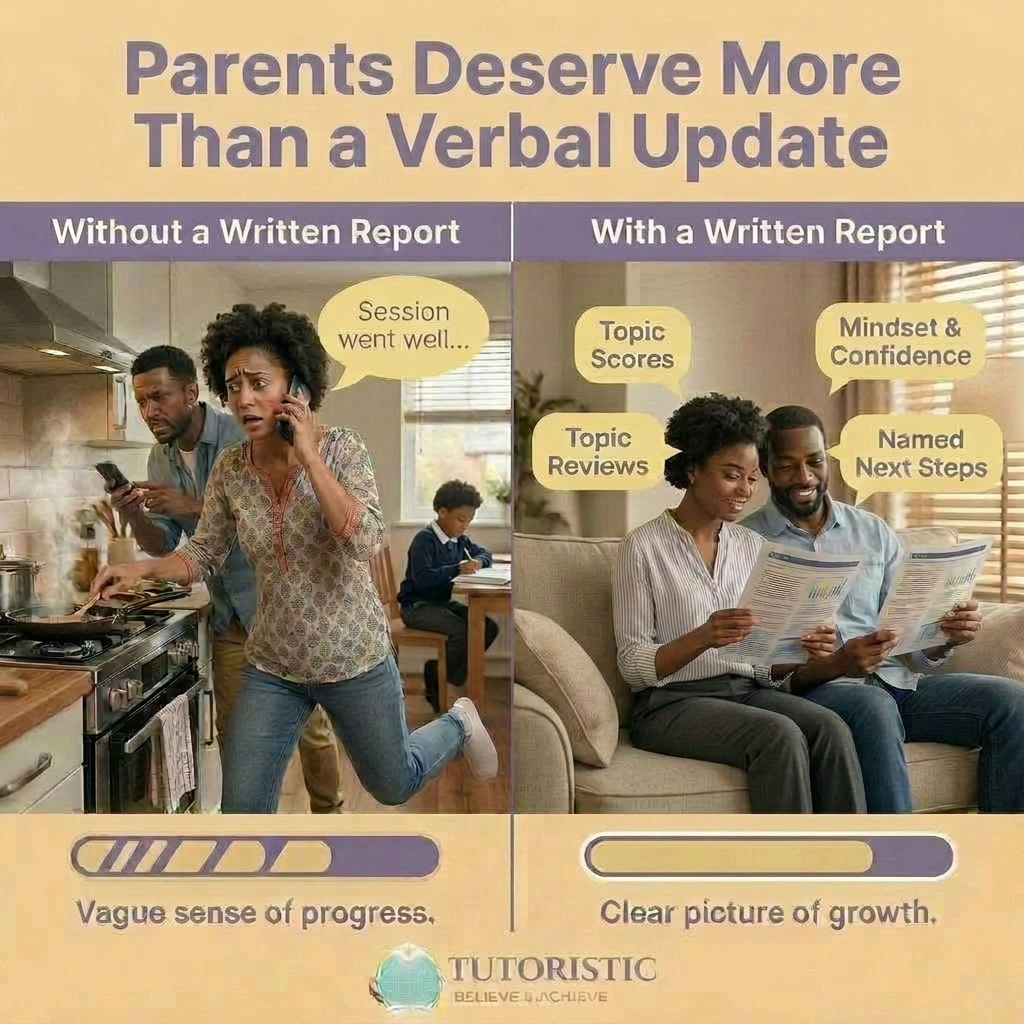
Why Every Tutee Deserves a Written Progress Report “It was detailed.” Those three words from a parent meant more to me than any five-star review. Not because they were flattering, but because they told me something important: she had not been expecting it. Sadly, that says everything about the current state of communication in private […]
Working with Children Who Have SEN

The Students Who Teach the Tutor: A Journey in Adaptive Mentoring When I first started my tutoring career, the majority of my students were largely neurotypical. However, over the past couple of years, that demographic has quietly and significantly shifted. More and more of the young people I work with sit somewhere on a neurodivergent […]
Why Study Skills Matter Just as Much as Subject Knowledge

Every year, without fail, I have the same conversation. A student comes into my online session—shoulders tense, eyes a little glazed—and tells me they don’t know where to start. They have exams looming, a pile of revision guides they haven’t opened, and the creeping sense that there simply isn’t enough time. Sound familiar? I work […]
Thinking About SATs? Here’s What Every Year 6 Parent Needs to Know

Year 6 SATs Support: A Parent’s Guide to Success SATs season is approaching, and if you’re the parent of a Year 6 child, you likely have plenty of questions. What exactly are the tests? How do examiners mark them? And how can you provide the right Year 6 SATs support without adding to the pressure […]
Understanding the Rut

Study Motivation Tips: Breaking Out of a Learning Rut Feeling stuck in a routine is a common experience for many children during the school year. Consequently, finding effective study motivation tips becomes essential when daily activities start to feel monotonous and the drive to complete homework seems elusive. This phenomenon is often referred to as […]
The Importance of Self-Care for Entrepreneurs and Taking Time to Wind Down

Work-Life Balance for Entrepreneurs: Moving Forward After a Loss As entrepreneurs, we often find ourselves wearing many hats and juggling multiple responsibilities. Finding a sustainable work-life balance for entrepreneurs is one of our biggest challenges, especially when life presents us with both planned and unexpected hurdles that take a heavy toll on our well-being. Recently, […]
A Good Tutor Versus A Great Tutor: What You Should Know

What are the Characteristics of a Great Tutor? 11 Essential Traits for Student Success When it comes to investing in tutoring services, the difference between a good tutor and a great tutor can significantly impact your child’s academic journey. As parents, understanding these distinctions helps you make informed decisions when seeking the best educational support. […]